Updated for 2026
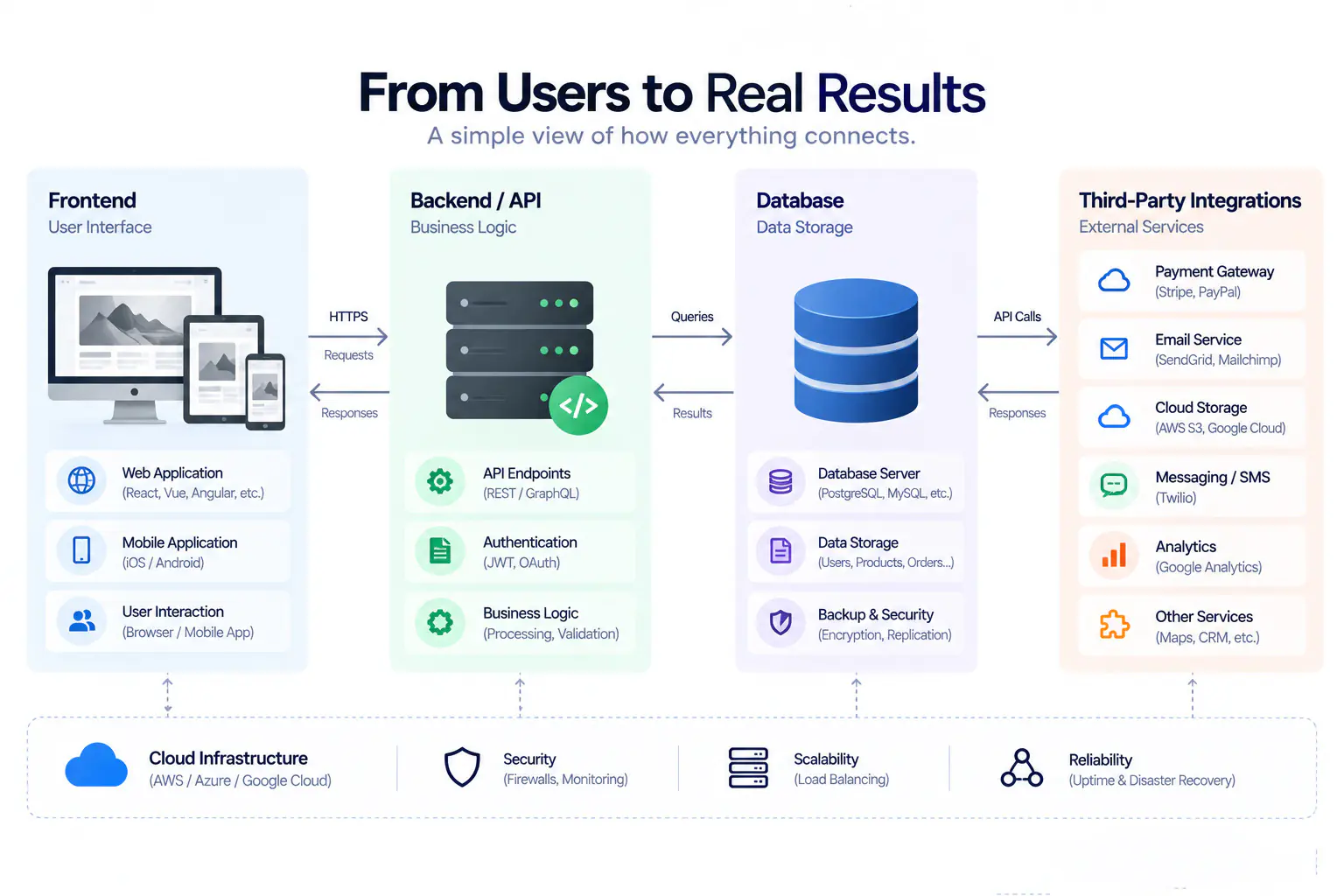
Custom software development means writing a system around how one organisation actually operates, instead of reshaping the organisation to fit a product designed for everyone. It covers internal tools, customer and partner portals, the connective work between systems that were never designed to exchange data, and the operational systems that are themselves the business.
The distinguishing question is not technical. It is whether the process being encoded is genuinely yours or merely familiar — and the honest answer is "merely familiar" more often than most teams expect.
TheBuzihub builds and maintains custom systems for businesses across the UAE, Saudi Arabia, Qatar, Kuwait, Bahrain and Oman. The broader question of whether to build at all is covered on choosing between configuring, buying and building; this page assumes that decision has been made and describes what follows.
Speak with our digital experts — describe the process you want encoded and we will tell you honestly whether it warrants a build. Or call +971 54 545 3510.
Four tests a build should pass before it starts
Custom software is the most expensive option and the only one that keeps costing after delivery. These four questions are the ones worth answering in writing.
Does an off-the-shelf product genuinely fail here? Not "we would have to change how we work" — whether changing how you work would make you worse. Most build requests dissolve on this question, and the ones that survive it are usually worth doing.
Is the process stable enough to encode? Software is a frozen decision. Encoding a process still in flux produces a system that fights its users within a year. Where the process is still moving, a lighter tool and a written procedure buy time cheaply.
Who will own it after launch? Named person, named budget. Custom software has an ongoing cost — dependency updates, security patches, platform changes — and a system with no maintainer is a liability accruing quietly. A useful rule of thumb when planning: assume a meaningful share of the original build cost, every year, simply to keep the system where it is today.
What is the smallest useful version? If nobody can describe a first release that delivers value on its own, the requirements are not understood yet. A build that only works once every feature is finished is a build that will be late and probably wrong.
What we actually build
The shapes recur, and naming them makes scope conversations shorter.
Internal tools and operational systems
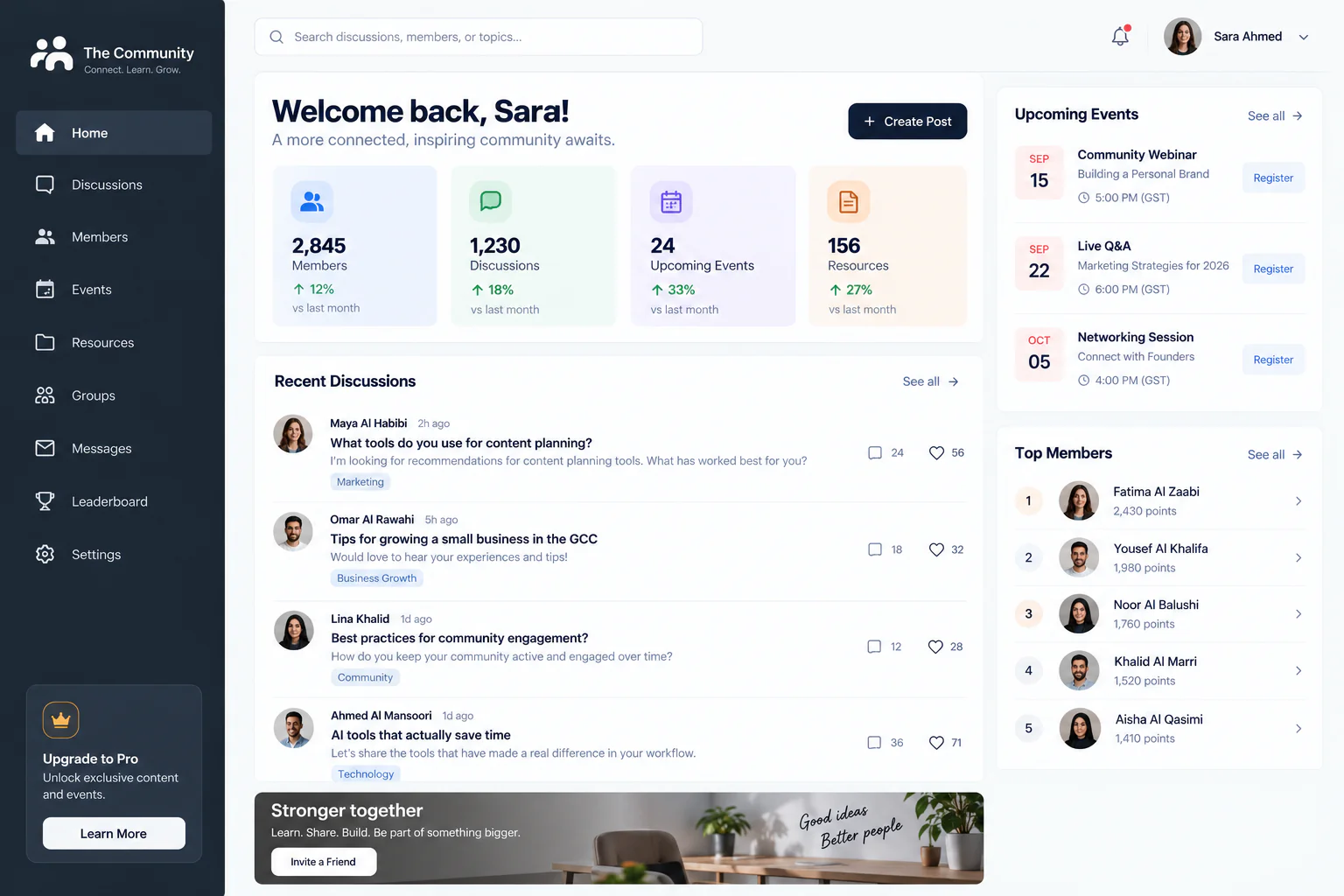
The systems staff use daily: scheduling, dispatch, inventory movements, approvals, case handling. Success here is measured in minutes of staff time and errors avoided rather than in features, and the biggest wins usually come from removing steps rather than adding screens.
The single most common finding is that a spreadsheet has been doing the work, and it contains the real specification — including the exceptions nobody mentioned in the requirements meeting. Those exceptions are the project: a system that handles the standard case and forces staff back to the spreadsheet for the awkward ten per cent has not replaced anything, it has added a second place to look.
Customer and partner portals
Where an external party sees a slice of your operation: order status, documents, account management, submissions. These carry identity and permission requirements that internal tools do not, and getting authorisation right is most of the engineering.
Where the portal is the primary commercial surface rather than a service layer, it belongs with the public build — performance, conversion and bilingual construction, or a storefront with catalogue and payment requirements.
Integrations
Making two systems agree. This is the least visible work and disproportionately what determines whether a technology estate functions. It includes the unglamorous parts — retries, reconciliation, and knowing what to do when the other end is down — which is what separates an integration from a script somebody runs.
Marketing systems are a frequent endpoint here: connecting CRM and automation platforms, and messaging APIs, which behave differently in this region.
Data and reporting layers
Where numbers from several systems are assembled into one answer. The engineering is usually straightforward; the hard part is definitional, and it is done with the people who will use the numbers rather than for them — how collection and definitions are set up.
Modernisation of something that already exists
Rarely a rewrite. Usually a boundary is drawn around the old system, new functionality is built beside it, and traffic moves across gradually. Full rewrites have a poor record because they must reach feature parity with a system whose behaviour nobody has fully documented — including the bugs people now depend on.
Start your digital transformation — book a technical review of the system you are living with.
Architecture decisions that are expensive to reverse
Most technical choices can be changed later. These cannot, cheaply, so they get decided deliberately and written down.
| Decision | Cheap to change later | Expensive to change later |
|---|---|---|
| Where the system of record lives | reporting tools reading from it | the data model itself |
| Identity and permissions | adding a role | retrofitting per-record authorisation |
| Where data is hosted | scaling within a region | moving jurisdictions after go-live |
| Synchronous or event-driven integration | adding an endpoint | reversing the pattern once systems depend on it |
| Multi-tenancy | adding a tenant | separating tenants that share tables |
| Bilingual content model | translating strings | adding a second language to a single-language schema |
The last row catches more Gulf projects than any other. A system built English-only, then asked for Arabic two years later, needs changes in the database, the interface layer and the layout — and the cost is an order of magnitude above what designing for two languages at the start would have been. We ask about the second language on day one even when the answer is "not yet".
Our domain-first delivery
We do not begin with a technology recommendation or a Gantt chart.
Learn the domain before the requirements. Sit with the people doing the work and watch what actually happens, including the workarounds. Requirements gathered in a meeting room describe the process as management believes it operates; the workarounds describe how it operates.
Model the data first. The entities and their relationships outlast every interface decision above them. A wrong data model is the one mistake that is genuinely expensive to correct after launch.
Ship something real in weeks, not quarters. A narrow slice, in the hands of actual users, early. Feedback from use is worth more than feedback from a demo, and it arrives while changing course is still cheap.
Automate the boring guarantees. Tests around the logic that matters, and a deployment that runs the same way every time. Not for elegance — because a manual deployment is where a Thursday-evening outage comes from.
Write the runbook as we go. How to deploy, what breaks, what to check first, who to call. Documentation written at the end is documentation written by someone who has forgotten the difficult parts.
Hand over continuously, not at the end. The client's repository from day one, credentials in the client's accounts, and architecture notes updated as decisions are made.
Security is a design property, not a phase
Custom systems hold the data a business would least like to explain losing — customer records, commercial terms, sometimes identity documents. Security added at the end is a review; security designed in is a set of decisions that make whole categories of failure impossible.
Four of those decisions carry most of the weight. Authorisation belongs at the data layer, so that a missed check in one screen does not expose records the user should never see — enforcing it once, where the data lives, beats enforcing it in every place that reads it. Least privilege applies to the application itself, not only to people: a system that cannot delete cannot be tricked into deleting. Secrets live in the environment, never in the repository, because a credential committed once is a credential in the history forever. And audit trails record decisions, not just changes — who was allowed to do what, when, which is the question anyone actually asks after an incident.
Data minimisation is the cheapest of the lot. Identity documents can usually be hashed rather than stored, and fields nobody has used in two years can be dropped. The most reliable way to avoid losing data is not to hold it.
Ownership, and what handover should contain
This is the section worth reading twice, because it is where agencies and clients most often discover they assumed different things.
You should own: the source code, in a repository under your account; the infrastructure, under your billing; the data, exportable in a documented format; the domain names and certificates; and the credentials to all of it. Third-party licences should be named, with their terms and renewal dates, before selection rather than after.
A handover should contain the code, an architecture note explaining why the structure is what it is, a runbook, an environment setup that a competent developer can follow without us, and a list of every external dependency and who pays for it. The test of whether it is real is simple: another team should be able to deploy a change without contacting us.
We build it this way because the alternative is a client who cannot leave, and a supplier who has stopped having to earn the relationship. If you are evaluating suppliers, the questions worth asking before you hire anyone covers the commercial side of the same concern, and the in-house versus agency versus freelancer comparison covers who should hold the work at all.
Builds in the portfolio, and what each one answers
TheBuzihub has built software in the Gulf since 2018 and publishes 24 client case studies on this site, six of them technology builds.
Three are relevant here. A car rental booking and management system is an operational system where the booking logic is the business. A jewellery brand's website and ordering system pairs a catalogue with an ordering workflow. A corporate website for a trading business is the simpler end of the same practice, and worth including because not every problem needs a system.
For businesses where the software is the product rather than supporting it, the commercial context differs — how product and go-to-market intersect.
Commissioning a Build — FAQ
How much does custom software cost?
It scales with the number of distinct workflows, the systems it must integrate with, and how much existing data has to be migrated. Migration is the line most often underestimated. We scope after a discovery phase rather than from a brief, because a number produced before anyone has seen the data is a guess presented as a quote.
How long before we can use it?
A first useful release is usually eight to sixteen weeks, deliberately narrow. Full replacement of an existing system takes longer, and most of the additional time goes into migration and the edge cases the old system handled that nobody documented. We aim to have something in real use early rather than a complete system late.
What happens if we stop working with you?
You keep everything, because it was always in your accounts. The repository, infrastructure and credentials are yours throughout, and the runbook is written for someone who has never spoken to us. We would rather be retained because the work is good than because leaving is difficult.
Can you maintain software another company built?
Often, and it starts with an assessment rather than a commitment. We read the code, dependencies and infrastructure and report what state it is in. Where the honest answer is that maintenance costs more than replacement, we say so — and where it is fine and simply unfamiliar, we say that too, which is the more common outcome.
Do you build mobile apps?
We do, and the more useful conversation is usually whether you need one. An app earns its cost through repeat use, offline capability or device features; where the requirement is really just a good mobile experience, a well-built responsive site costs less and reaches more people. That comparison is set out on the mobile app development page.
How do you handle data residency requirements?
By establishing them before the architecture, not after. Some sectors and jurisdictions in the region require data to remain in-country, and that constrains hosting, backups and third-party services. Retrofitting residency after launch typically means a migration project, so it is the first infrastructure question we ask.
Will our team be able to maintain it?
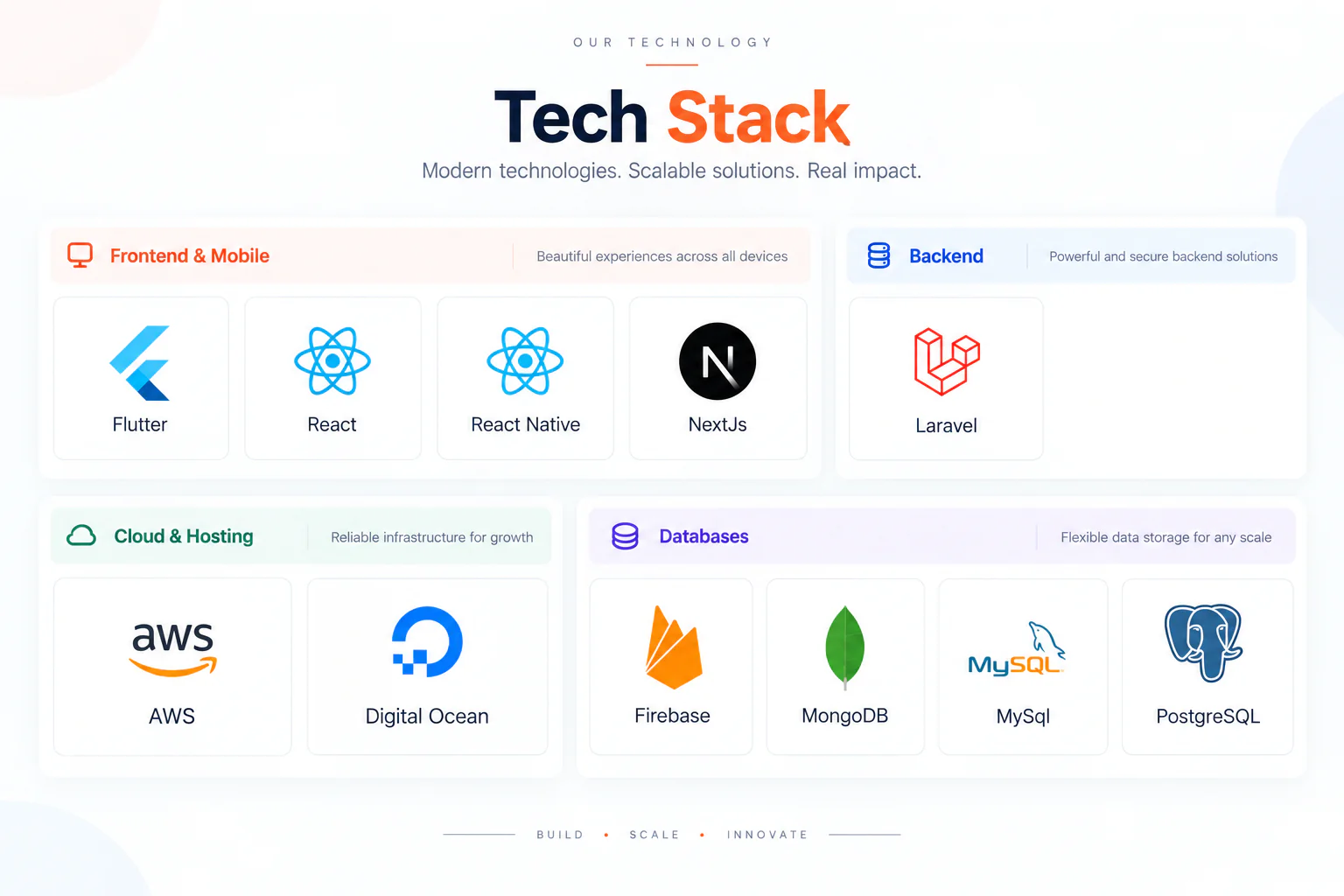
That depends on choices made at the start, so we make them with the answer in mind. We use mainstream, well-documented technologies rather than whatever is most interesting, and we bias towards fewer moving parts. A system your team can maintain is worth more than a marginally more elegant one they cannot.
What if requirements change mid-project?
They will, and the delivery approach assumes it. Short increments with working software at the end of each mean a change of direction costs weeks rather than the whole engagement. What we hold firm is the data model, because that is the part where late changes are genuinely expensive.
Related Reading at TheBuzihub
- Deciding whether to build at all — the configure, buy or build assessment this page follows on from.
- Public-facing builds and what makes them convert — the surface layer, with different economics.
- When an app earns its cost — and when a responsive site does the same job.
- Catalogue, payment and fulfilment requirements — commerce-specific constraints on a build.
- Who should hold the work — in-house, agency or freelance — the staffing question underneath ownership.
- Where automation platforms fit against custom code — often the cheaper answer.
- Programmes that span product and marketing — engagements where both sides move together.
- A booking and management system, published in full — an operational build written up.
Discovery before any number is quoted
A fixed price produced from a brief is a fixed price for a misunderstanding. We would rather charge for a short discovery, produce a scope both sides believe, and then quote against something real.
Get a free consultation today: bring the process, the systems it touches, and the spreadsheet doing the work at the moment. What comes back is whether this warrants custom software, what the smallest useful version looks like, and what maintaining it will cost annually — the figure most estimates leave out.
Talk to us · How we work · The full service range
Phone: +971 54 545 3510 Email:info@thebuzihub.comOffice hours: Monday to Friday 09:00–18:00, Saturday 09:00–13:00 (UAE time). Current hours are always on the contact page.