Our Custom Offerings
With a dedicated in-house team of experienced engineers and over a decade of hands-on execution, we design and build digital systems that support business operations, scalability, and long-term growth. Our focus is not novelty. It is reliability, structure, and performance.
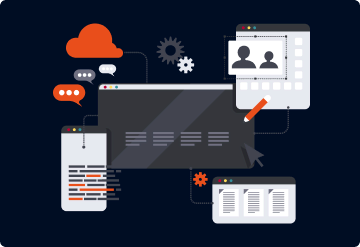
Websites
Custom-built websites that deliver smooth user experiences and robust functionality, designed to scale with your business needs. Each site is optimized for performance, ensuring fast load times, mobile responsiveness, and strong SEO foundations.
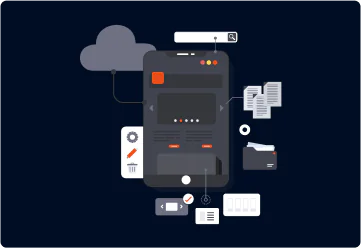
Mobile Apps
Innovative mobile applications designed to boost user engagement and simplify processes. Featuring intuitive interfaces and advanced functionalities, our apps deliver top-notch performance on both iOS and Android platforms, creating impactful and efficient user interactions.
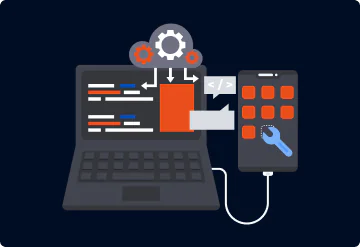
Systems Design, Setup & Automation
Custom software solutions designed to optimize workflows, automate tasks, and support business growth. This includes CRM, bots, and automation systems that streamline lead and data management, improve response time and follow-up, reduce manual workload, and enable scalable operations.
Crafting Digital Innovation Through Expertise
With years of experience, we combine industry expertise with forward-thinking strategies to create digital solutions tailored to your business needs.
Our innovative approach pushes the boundaries of technology, ensuring exceptional results that drive success.
We focus on crafting scalable, flexible solutions designed for long-term growth, helping your business adapt to future challenges.
By aligning technology with your business goals, we provide tools that empower you to stay competitive and achieve sustainable success, ensuring measurable growth and a strong market position.
Our Process
Our process is straightforward: we collaborate closely with you to understand your needs and goals.
From concept to completion, we ensure every step is focused on delivering a functional, high-quality solution that drives results for your business.Exploration & Discovery
Business understanding, requirements gathering, and system audit.
 Week 1-2
Architecture & Planning
Defining platform structure, user flows, and technical roadmap
 Week 3-4
Development & Implementation
In-house development using modern, proven technologies.
 Week 5-8
Testing & Quality Assurance
Security testing, performance checks, and system validation.
 Week 9-10
Launch & Handover
Deployment, documentation, and internal training.
 Week 11
Our Process
Our process is straightforward: we collaborate closely with you to understand your needs and goals.
From concept to completion, we ensure every step is focused on delivering a functional, high-quality solution that drives results for your business.
Exploration & Discovery
Business understanding, requirements gathering, and system audit.
Architecture & Planning
Defining platform structure, user flows, and technical roadmap
Development & Implementation
In-house development using modern, proven technologies.
Testing & Quality Assurance
Security testing, performance checks, and system validation.
Launch & Handover
Deployment, documentation, and internal training.
What Makes us Special?
We act as: Digital systems architects, In-house execution partners, and Long-term technology support teams.
We translate business requirements into stable, secure, and scalable platforms.

Custom Development & Security
Every solution is designed to match the business context and technical requirements. We focus on Custom-built platforms and applications, Secure architecture and access control, Data protection and system stability. Security is embedded by design,not added later.
Technology Philosophy
We adopt technologies based on: Stability and long-term support, Scalability and performance, Integration flexibility. Innovation is applied where it adds value, not for experimentation.

Ready-Made Solutions
For specific sectors, we offer modular solutions that accelerate deployment while allowing customization. Use cases include: Education platforms, Medical and healthcare systems, Real estate system, Car Rental System. Speed is achieved without compromising structure or security.

Project Management & Quality Assurance
Dedicated project managers ensure: Clear communication, Defined milestones, Controlled delivery timelines. Quality assurance is mandatory. If it doesn’t meet standards, it doesn’t go live.

Features Factory
Our solutions keep evolving, so you’re always ahead of the curve. We don’t just launch and leave; lifelong updates are included to keep you on top of the game.
Reliable Support & Security
We offer fast, reliable support to keep your systems running smoothly and resolve any issues that arise. Each product is tailored to your needs, with top-tier security protecting every click, swipe, and scroll.

Marketing & SEO integration
All platforms are built to support growth systems, including: Analytics and tracking readiness, Marketing integrations (GA, notifications, newsletters), SEO-friendly architecture and CMS structure.

Simplified SEO
Our custom CMS lets you tweak your SEO easily; no tech skills required. Easily boost your rankings and stay ahead of the competition with minimal effort.
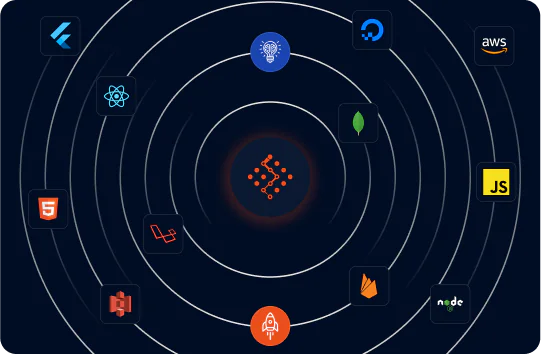
Our Techstack
We use advanced yet practical technologies to build solutions that fit your needs. From strong foundations to smart tools, our systems are built to perform reliably and adapt as your business grows.
- Frameworks
- Databases
- Hosting
 Flutter
 ReactReact Native
 Laravel
 NextJs
 Firebase
 MongoDB
 MySql
MySql PostgreSQL
 AWS
AWS Digital Ocean
Ready Solutions
Need something quick?
No problem! We’ve got ready-made solutions designed to streamline your business.
Fast, efficient, and completely hassle-free.
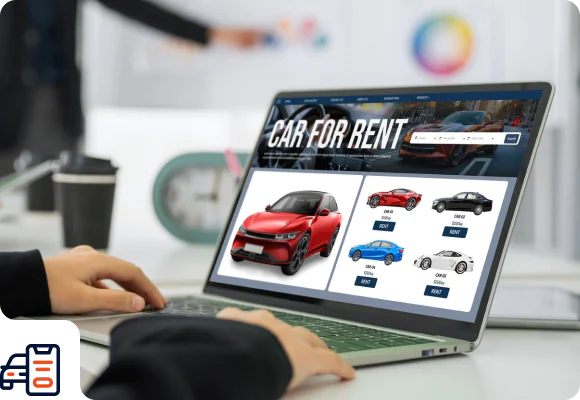
Car Rental System
Simplify fleet management and customer bookings with a system designed to optimize operations. Manage reservations, payments, expenses, and website content with ease.

Education System
Streamline learning with tools for managing students, courses, and schedules. This platform enhances organization and communication for schools or training centers.

Medical System
Organize patient records, appointments, and billing with an intuitive medical management system. Designed to save time and improve healthcare workflows.

Real Estate System
Manage properties, leads, and agents with a smart real estate management system. Built to streamline operations and simplify every step from listing to sale.
Advanced Technologies: AI, IoT & Security
Through our technology partnerships, we support advanced initiatives including:
Ongoing Support for Your Success
Our role continues beyond launch
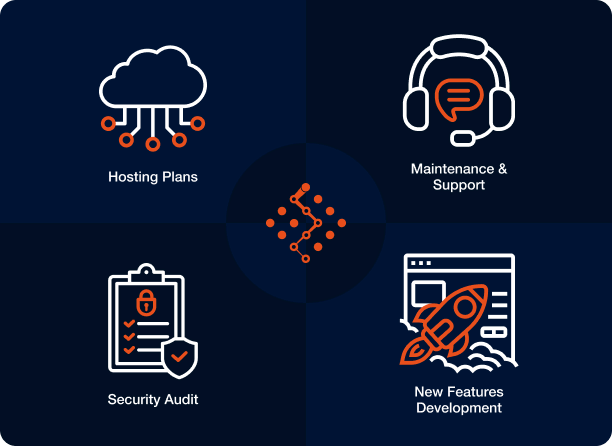
Continuous updates and improvements
Ensuring your technology stays current and runs flawlessly.Security audits and monitoring
Protecting your business around the clock with thorough monitoring.Flexible maintenance and hosting plans
Flexible hosting and maintenance options tailored to ensure smooth, continuous operation.Our Successful Projects
Explore some of our top tech projects delivered for clients across various industries.

Hamad Al Jasser Magazine e-commerce Website
Hamad Al Jasser website represents the cultural and scholarly legacy of Sheikh Hamad Bin Mohammed Al Jasser ; a pioneering Saudi journalist, historian, and author. The platform serves as a digital resource hub for his writings, studies, publications (including Al-Arab magazine), and the cultural initiatives of the Hamad Al Jasser Cultural Center, which preserves and promotes Arab heritage and historical research.


Drive Ease Car Rental Website & System
Drive Ease Car Rental is a UAE-based vehicle leasing company offering both short-term and long-term options for residents and visitors. The business focuses on delivering a smooth customer experience through an online booking platform, while maintaining strong internal operational control across fleet management, reservations, and financial tracking.

Lama Jewelry Website & System
Lama Jewelry is a luxury jewelry brand offering handcrafted gold and precious metal pieces. The brand combines traditional craftsmanship with modern e-commerce, allowing customers to browse, customize, and purchase jewelry online while ensuring pricing accuracy based on real-time precious metal values.
BA Enterprise Website
BA Enterprise Group is a multi-sector business platform operating across retail, F&B, real estate, and mall development. The website showcases their commitment to quality, ethical practices, and long-term partnerships. Our solution highlights their credibility with clear navigation, strong visuals, and professional brand-focused messaging.
Malls Solution Hub Website
Malls Solution Hub is a UAE-based consultancy and operational support company partnering with shopping malls, retail spaces, and shopfitting initiatives. They provide strategic guidance, execution support, and management services tailored to the retail and mall sector, serving projects across all Emirates.
Fair Trading International Website
FT International (Fair Trading International) is a Dubai-based wholesale trading company operating from the Jebel Ali Free Zone. They specialize in acquiring and redistributing branded stocklots, including overproduction inventory, unsold stock, canceled orders, and liquidation merchandise, connecting surplus products with retailers and wholesalers globally.
Build, integrate, or buy - how the decision gets made
TheBuzihub delivers technology work as one of three decisions for a mid-market GCC business: build something custom, integrate existing tools together, or buy an off-the-shelf platform and configure it.
Building custom makes sense when the business process itself is the differentiator — a workflow, a pricing model, or a customer experience no off-the-shelf platform supports — and the cost of that differentiation justifies a longer build.
Integrating existing tools is usually the right call when each individual piece already works well enough but nothing talks to the others, so the project is really about connecting a CRM, a booking system, and a website rather than replacing any of them.
Buying and configuring an off-the-shelf platform is the fastest and lowest-risk route when the business need is common enough that a mature product already solves it well, and the main cost saved is the time a custom build would otherwise take.
The decision is made early, against the business's actual constraints — budget, timeline, and how unusual the underlying process really is — rather than defaulting to a custom build because it sounds more capable, which is the most common way a project ends up costing more than the problem was worth solving.
What e-commerce and app builds need beyond design
An e-commerce build needs more than a product catalog and a checkout to actually convert in GCC markets specifically: local payment methods, cash-on-delivery logistics that a template store rarely handles well by default, and bilingual product pages that read naturally in both English and Arabic rather than a machine-translated copy of one. App builds carry a different risk profile than a website — an app update has to clear a store review before it reaches a single user, so a release cadence has to plan around that delay in a way a website's instant deploy does not, and a poorly scoped first version risks a rejected submission before the product has shipped at all.
Both categories share the same underlying trap: treating the design phase as the whole project and underestimating what happens after launch — payment gateway maintenance, app store policy changes, and the ongoing hosting and security work neither category can skip once it is live.
Where automation and CRM fit into a tech stack
Marketing automation and a CRM implementation are usually the two pieces that turn a working website into an actual sales system, rather than a page that generates a lead and then loses track of it.
A CRM's real value shows up after the first sale, not during it: tracking which lead source actually converts, which follow-up sequence closes deals faster, and giving a sales team one shared view of every prospect instead of a shared inbox and a spreadsheet that falls out of date within a week.
Automation layered on top of a CRM handles the repetitive parts — a welcome sequence, a follow-up reminder, a re-engagement email to a lead that went quiet — freeing a small team to spend its time on the conversations that actually need a person.
Neither piece works well bolted onto a website as an afterthought; both are scoped alongside the build itself, since retrofitting a CRM onto a site that was never built to feed it data cleanly is slower and more expensive than planning for it from the start.
Technology work with published detail
Frequently asked questions
Should we build custom or buy an off-the-shelf platform?
Build custom when the business process itself is the differentiator and no existing platform supports it well; buy and configure when the need is common enough that a mature product already solves it, since building from scratch there mostly recreates work someone else has already done. Most projects are a mix — a custom core with off-the-shelf pieces integrated around it.
What actually drives the cost of a website or app project?
Scope depth (how many custom features versus configuration), integration complexity (how many other systems it has to talk to), and ongoing maintenance rather than the build alone. A website and an app follow different pricing patterns and are scoped separately rather than quoted against one blended number.
How long does a typical build take?
It depends mainly on scope and how many integrations are involved — a straightforward site moves through discovery, design, build, testing, and launch in sequence, and an app adds store review time on top of that same sequence. Integration-heavy projects, connecting a CRM, a booking system, and a website together, often take longer than the individual pieces would alone. A scoping call against the actual requirements is what turns that into a real timeline.
What's included after launch — is there ongoing support?
Yes, and it is scoped as part of the project rather than assumed. Hosting, security patching, and platform updates continue after launch regardless of the build type, and app builds specifically need a plan for store policy changes that can require a resubmission with little notice.
Where does AI actually fit into a build, versus being a buzzword?
In practical places: automated data entry, lead qualification, customer-facing chat that hands off to a person when it should, and content or image generation inside an existing workflow rather than a wholesale AI product. The useful version usually augments an existing process rather than replacing the system around it entirely.
When does a website need a redesign versus a full rebuild?
A redesign fits when the underlying platform still works but the design and user experience have fallen behind; a rebuild is needed when the platform itself is the constraint — it cannot support the integrations or scale the business now needs, no matter how the front end is redesigned. Confusing the two usually means paying for a redesign that does not fix the actual bottleneck.