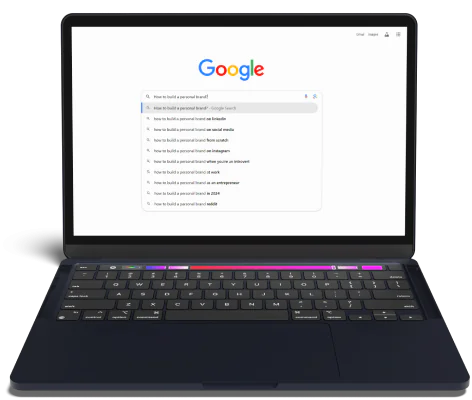
What is OnlineReputation Management?
Online Reputation Management (ORM) is no longer optional in a digital-first economy.
Your reputation directly impacts trust, buying decisions, partnerships, and long-term revenue.
At TheBuzihub, we don’t approach reputation as damage control. We approach it as strategic positioning.
From proactive monitoring and perception management to structured response strategies and authority-building, we help brands and Professionals maintain credibility and control their digital narrative.
Because in today’s market, reputation isn’t just image; it’s influence, leverage, and growth.
Why is it Important?
Your online reputation serves as the foundation of your credibility and growth in the digital age. Managing it effectively empowers you to build trust, strengthen relationships, and unlock opportunities that drive sustained success
Our Services

Linkedin content creation & Management & management
We create impactful LinkedIn posts, optimize your profile, and craft strategies to expand your professional network. Our approach builds authority, fosters meaningful connections, and ensures your LinkedIn presence aligns with your personal or business brand.

LinkedIn Top Voice Badge
Stand out as a thought leader with our expert guidance. We help you craft engaging, insightful content and boost meaningful interactions, positioning you for recognition as a LinkedIn Top Voice and enhancing your visibility across your industry.

Articles and Blogs writing and publishing
We provide professionally written, SEO-optimized articles and blogs tailored to highlight your expertise and achievements. Our content strategy ensures your message resonates with the right audience, reinforcing your authority and driving engagement.

Wikipedia Creation
Enhance credibility with comprehensive profile on Wikipedia. We craft accurate, well-sourced content with verified multimedia elements, boosting search visibility and ensuring your online presence reflects your achievements professionally.

Wikitia Creation
Our Wikitia creation service helps you build a detailed, high-authority profile on Wikitia paltform. We ensure your page is optimized with multimedia and verified content, boosting your search engine ranking and online visibility.

Negative News removal
Our team will audit your online presence to identify and remove or push down any negative news or links from online search results, ensuring your reputation remains positive and under control.

Google Knowledge Panel
Secure a verified Google Knowledge Panel to showcase key information about your brand or personal profile. We ensure your panel is accurate, professional, and optimized to enhance search engine visibility and establish trust.
Blog Creation
As part of our Online Reputation Management, we build a dedicated blog-style website that highlights your achievements, expertise, and positive content. This platform strengthens your online presence, improves SEO visibility, and ensures that search results reflect the right image of you or your brand.

Press Releases
Share your news with the world through compelling press releases crafted by professionals. We optimize content for visibility, distribute it to reputable outlets, and track the results to amplify your reach and strengthen public perception.

Our Process
We follow a comprehensive, two-phase approach designed to deliver impactful results for your online reputation. Our process focuses on building a solid foundation and amplifying your presence, ensuring your brand’s narrative aligns with your goals and values.
Phase One: Foundation Building

Introduction Call
Personal Brand Audit & Analysis
Strategic Planning
LinkedIn Profile Optimization
Ghostwriting Sessions
Content Drafting
Review & Feedback
Content Posting
Analytics & Reporting
Phase Two: Brand Growth & Crisis Management
Press Release Writing & Distribution
Negative Online Content Removal
Wikipedia & Wikitia Profile Creation & Publishing
Google Knowledge Panel Setup
LinkedIn Top Voice Badge Achievement
Reputation Monitoring & Brand Protection
Blog Creation
your Top ORM Packages
Contact us to discuss the package that best suits your needs
Case Studies
Check how we helped some of our clients achieve high online presence and authority
See More Case Studies
A.A. - ORM
This Online Reputation Management project focused on A.A. (Confidential Client)., a senior executive leading multiple large-scale entities within the retail and real estate sectors.Given the scale of operations and public-facing leadership role, a strong, credible, and authoritative online presence was essential to reflect leadership vision, business achievements, and industry influence.

R.S. - ORM
This Online Reputation Management project focused on R.S. (Confidential Client), a tech entrepreneur, digital transformation expert, and business leader operating across marketing technology, digital strategy, and business growth consulting.The initiative aimed to ensure that R.S.’s online presence accurately reflects professional expertise, leadership depth, and long-term credibility across LinkedIn, search engines, and authoritative third-party platforms.
What online reputation management actually covers
TheBuzihub runs online reputation management (ORM) as a structured program, not a single takedown request: what a search result says about a person or a business is shaped by suppressing what's damaging, building what's positive, and responding quickly when a new issue appears, run together rather than as separate one-off jobs.
Suppression means pushing negative or outdated results further down the page by strengthening positive, verified content — a Knowledge Panel, a professional profile, well-sourced press coverage — the lever that applies once a result does not qualify for direct removal under a platform's own narrow removal criteria.
Crisis response is the fastest-moving piece: the first hours after a negative story breaks determine whether it is contained to one outlet or picked up more widely, so a response sequence is agreed before a crisis happens, not improvised during one.
The work sits close to two other disciplines: it borrows brand consistency from identity work, since a scattered profile across platforms is itself a credibility problem, and it borrows technical execution from SEO, since most of what "removes" a negative result is really out-ranking it with something stronger.
Remove, or push down: how the two actually differ
"Remove or push down" covers two different mechanisms, and knowing which one applies to a given result is the first thing a scoping call sorts out.
Removal works for a narrow set of requests — content that is provably defamatory, doxxing, non-consensual imagery, or a small number of other legal categories — submitted directly to the platform hosting it.
A negative review, an unflattering news article, or an old story that is simply true usually falls outside that narrow category, which is where push-down applies instead: suppression.
Suppression means publishing stronger, more authoritative, more frequently updated content until the negative result no longer holds a first-page position. It is slower than a removal request and it does not erase the original page, but it is the lever available for everything a removal request cannot reach.
How a reputation crisis is sequenced
A reputation crisis is sequenced, not improvised — the same discipline how reputation management works across GCC markets is built around. The first step is confirming what is actually being said and where it is spreading, before any public response is drafted, because responding to the wrong version of a story wastes the window that matters most.
The next step is deciding whether a public response helps or hurts — sometimes the correct move is a direct, factual statement, and sometimes engaging at all extends a story's life that would otherwise fade on its own, so that call is made deliberately rather than by instinct.
Once a direction is set, monitoring runs continuously rather than at the start and the end, since a story can resurface on a different platform days after it appeared contained on the first.
The goal of a sequence is not to prevent every negative mention — that is not achievable — but to stop a single incident from compounding into a pattern that shows up on every future search of the name or the business.
Where reputation work overlaps brand and SEO
Reputation work overlaps two other disciplines more than clients usually expect going in.
A scattered brand presence — inconsistent naming, mismatched profile photos, an outdated logo on one platform and a current one on another — is itself a small credibility problem before any negative story ever appears, which is why a documented brand system is often the first thing a reputation program checks rather than something handled separately.
The technical half overlaps with how organic search programs are built for the Dubai market: suppressing a negative result by publishing stronger content only works if that content is actually structured to rank, which means the same technical and on-page fundamentals that drive any SEO program apply here too, aimed at a narrower set of terms — usually a name, a company, or a specific incident — rather than a broad keyword list.
Treating reputation as a standalone service misses both connections; treating it as an extension of brand and search work is closer to how it actually gets fixed.
Frequently asked questions
What can and cannot be removed from Google?
Search engines only act on a narrow set of legal categories — defamation, doxxing, non-consensual imagery, and a handful of similar cases — and almost nothing else qualifies, however damaging it is. A negative but true review or news story does not qualify for removal. The available lever for everything outside that narrow category is suppression: outranking it with stronger, more credible content instead.
How long does suppression take to work?
It depends on how competitive the search terms are and how established the negative content already is — a recent, thin post can be outranked in weeks, while a well-linked news story that has been live for years takes longer and needs a sustained publishing effort. Suppression is a compounding process, similar to SEO, not a single action with a fixed date.
What's the policy on responding to negative reviews?
Respond factually, briefly, and without escalating — acknowledging a genuine issue and stating what was done about it reads better to a future reader than silence or a defensive reply. Reviews are rarely removable, so the response itself becomes part of the public record and is written with that in mind, not just as a reply to the original reviewer.
What actually happens during a reputation crisis?
First, confirming exactly what is being said and where it's spreading before drafting any response, since reacting to the wrong version wastes the window that matters most. Then a deliberate call on whether responding publicly helps or extends the story's life. Monitoring then continues for days or weeks afterward, since a story can resurface on a different platform after appearing contained.
How is reputation work measured?
Mainly by what a search of the name or business actually returns — how far down negative results have moved, how many first-page results are now positive or neutral, and how quickly a new negative mention gets addressed. It is closer to an ongoing search-visibility measure than a single before-and-after number.
How is this different from PR?
PR is largely about getting a story told through media outlets and journalists; reputation management is about what search engines and AI answers surface when someone is looked up, which depends on technical and on-page factors PR does not typically touch. The two overlap on messaging but the levers — media relationships versus search structure — are different, and a serious situation usually needs both.
Do you work with individuals as well as businesses?
Yes — executives, founders, and public-facing professionals make up a large share of reputation work, often alongside the business they represent, since a leader's personal search results and the company's are usually looked up together. The approach is the same in both cases: confirm what's actually searchable, suppress what's damaging, and build what's positive.
Should this run alongside legal action, not instead of it?
For genuinely defamatory or illegal content, yes — a legal request is the only route to actual removal, and reputation work runs in parallel rather than replacing it, handling everything a legal case does not reach: the surrounding search results, related coverage, and how the incident reads once any legal process concludes.
Related reading
- the other six services and what each answers
- talk to us about a reputation situation
- the audit that finds what's actually ranking against a name
- when a full rebrand is the right response, not just suppression
- the publishing cadence suppression depends on
- what to check before commissioning reputation work
- where reputation work sits among the services GCC businesses buy
- how a reputation program factors into a marketing budget