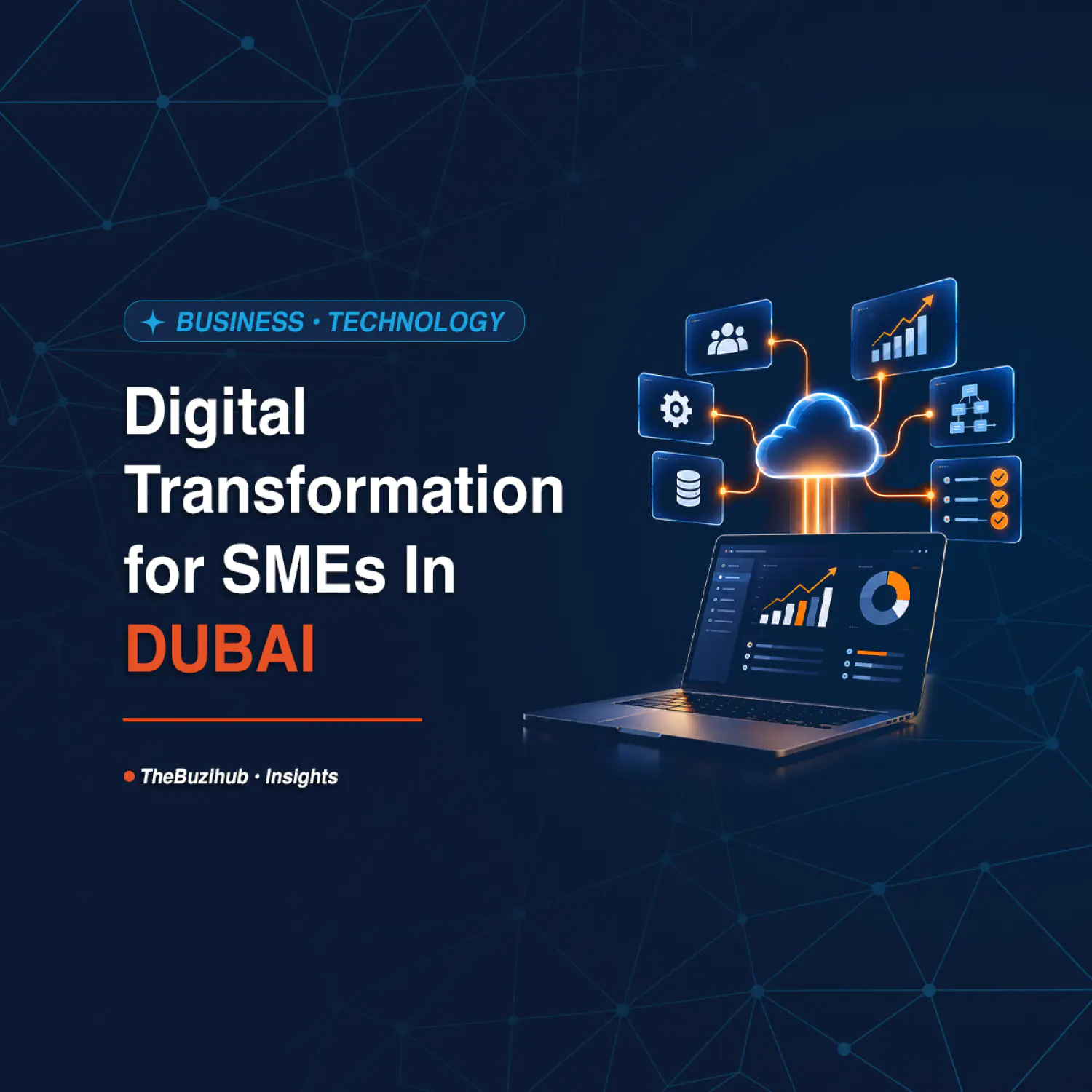
Digital Transformation for SMEs in Dubai
Your business doesn't need more software. It needs fewer things slowing it down. Discover how SMEs in Dubai can turn disconnected systems, manual tasks, and scattered data into smarter operations that are built to scale.
Digital transformation has never been more accessible to small and medium-sized businesses. Cloud platforms, automation tools, and AI-powered applications that once required significant investment are now within reach of smaller teams.
But accessibility creates another problem: businesses can end up buying technology without fixing the processes behind it.
For SMEs in Dubai, the opportunity isn't simply to digitize existing operations. It's to build a business that runs smarter, responds faster, and can grow without every new customer creating more administrative work.
Why going digital isn't enough
Many businesses operate through a patchwork of spreadsheets, messaging apps, accounting software, and customer management tools. Each serves a purpose, but together they can create disconnected workflows.
Information gets entered twice. Teams lose track of follow-ups. Reporting takes hours. Decisions depend on data that is incomplete or outdated.
The cost isn't always obvious. It appears in wasted time, missed opportunities, and employees spending more energy managing processes than moving the business forward.
Before adding another platform, identify where work gets stuck. The biggest opportunity may not be new technology, but making existing systems work together.
Start with the problem, not the platform
The market is full of tools promising to transform how businesses operate. Choosing between them starts with understanding what the business actually needs.
A service company may need a CRM to organize leads and follow-ups. A trading business may need better inventory visibility. A growing agency may need connected project management, resource planning, and financial reporting.
These businesses don't need the same solution.
Define the problem, identify the outcome you want, and evaluate tools against that objective. Consider integration, ease of use, ongoing costs, and whether the system can support the business as it grows.
The best technology isn't necessarily the most advanced. It's the technology that solves the right problem without creating three new ones.
Automation has to earn its place
Automating repetitive tasks can save time and improve consistency, but automation doesn't fix a broken process. It can simply make the inefficiency happen faster.
Start with tasks that are repetitive, time-consuming, and easy to measure: data entry, routine follow-ups, invoice processing, or report generation.
Then establish a clear workflow before automating it. Decide who owns each step, what triggers the next action, and how exceptions are handled.
For SMEs with limited resources, a few well-chosen automations can be more valuable than a company-wide technology overhaul.
Making data work for the business
Digital tools generate plenty of information. The challenge is turning it into decisions.
More leads mean little if conversion rates are falling. Higher revenue can hide declining margins. Faster operations may still leave customers dissatisfied.
SMEs need a clear view of the numbers that matter to their business, whether that's acquisition costs, profitability, response times, or customer retention.
Connected systems make these relationships easier to understand. Even a simple, reliable reporting setup can help management spot problems earlier and allocate resources more effectively.
The cost of getting it wrong
Software subscriptions are only one part of the investment. Implementation, integrations, employee training, data migration, and ongoing support all affect the real cost.
Trying to change everything at once can disrupt daily operations and overwhelm teams that already have limited capacity.
A more practical approach is to start with one high-impact problem, measure the results, and expand from there. Set a baseline before implementation so improvements can be evaluated against actual performance.
Digital transformation should be an investment with a purpose, not a collection of subscriptions without a clear return.
Building for what's next
For SMEs in Dubai, digital transformation doesn't have to happen all at once. It starts with understanding where the business loses time, where information breaks down, and which improvements will make the biggest difference.
The businesses that benefit most won't necessarily be those using the most technology. They'll be the ones choosing it deliberately, connecting it to real business needs, and adapting their systems as they grow.
The goal isn't to make a business more digital for the sake of it. It's to make it work better.
BuziBlog
Subscribe to BuziBlog
New articles on marketing, technology and business, straight to your inbox.
We are committed to your privacy. TheBuzihub uses the information you provide to send you BuziBlog articles. You can unsubscribe from any email we send.