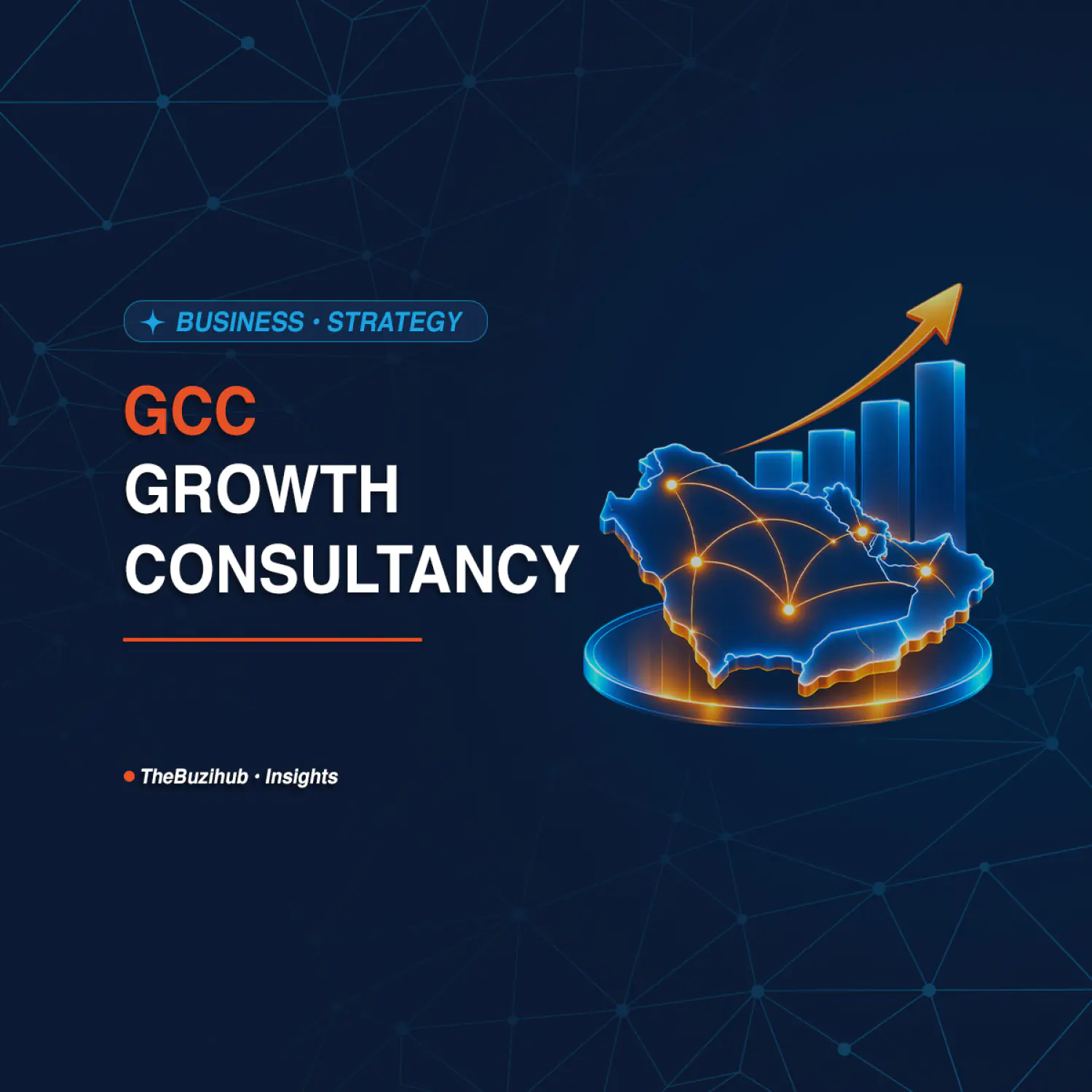
GCC Growth Consultancy
Growth doesn't come from entering more markets. It comes from knowing where the opportunity is and how to turn it into lasting results. Discover how businesses can approach the GCC with a clear strategy built to scale.
The GCC offers diverse markets, growing industries, and new customer opportunities. For companies looking to expand, the region can provide a platform for reaching new audiences, developing partnerships, and increasing revenue.
But opportunity alone doesn't create sustainable growth. Each market has its own customers, competitors, business environment, and expectations. A strategy that works in one country may need adjusting in another.
Growth consultancy is not simply about setting bigger targets. It's about making informed decisions, focusing resources, and expanding without losing direction or control.
Why growth needs a clear direction
Businesses often approach expansion with ambitious targets but limited understanding of what achieving them requires. They may invest in marketing before validating demand, pursue several markets at once, or increase sales activity without preparing their operations.
These decisions create pressure without consistent results. Teams become stretched, costs increase, and it becomes harder to identify what is contributing to growth.
Start by understanding the business's current position. Review performance, identify gaps, and establish what is preventing progress. The best opportunity may be improving existing operations before entering a new market. This creates a stronger foundation for decisions about timing, investment, and expansion before committing significant time or resources.
Understand the market before entering it
The GCC is not one uniform market. The UAE, Saudi Arabia, Qatar, Kuwait, Bahrain, and Oman each have distinct customer expectations, competitive conditions, and routes to market.
Businesses need to understand where demand exists, who their competitors are, how customers make decisions, and which local requirements may affect their plans.
A service provider may need to adapt its offer, while a product-based business may need to assess distribution, pricing, and partnerships.
Market research replaces assumptions with evidence, helping businesses prioritise markets where their offer has the strongest potential.
A growth strategy needs more than targets
Once an opportunity is identified, the challenge is turning it into a practical plan. Revenue targets alone do not explain how a business will attract customers or deliver consistently.
A clear growth strategy connects positioning, marketing, sales, operations, and financial planning. It defines the audience, value proposition, channels, and resources required for expansion.
Each activity needs a purpose and measurable outcome. Otherwise, businesses risk spending time and budget on initiatives that do not support their objectives.
Making the right investment
Growth often requires investment in people, marketing, technology, partnerships, or new capabilities. The challenge is deciding where resources will have the greatest impact.
Expanding too quickly can increase fixed costs before revenue is established. Investing too little can limit a business's ability to respond to demand or compete effectively.
Assess expected returns, risks, and the business's capacity to deliver. Prioritise clear needs, test initiatives where possible, and use results to guide the next step.
For businesses with limited resources, focused investment can be more effective than trying to pursue every opportunity at once.
Measuring what drives performance
Revenue is an important measure of growth, but it does not show the full picture. Sales may increase while profit margins fall, customer acquisition costs rise, or retention weakens.
Track indicators that reflect business objectives, such as conversion rates, acquisition costs, profitability, repeat business, market share, and channel performance.
Reliable reporting shows what is working and where adjustments are needed, helping management allocate budgets, set priorities, and respond early.
Growth should be measured by the quality of results, not just their size.
Building for sustainable expansion
For businesses looking to grow across the GCC, success depends on more than identifying a promising market. It requires a clear understanding of local conditions, a focused strategy, and the operational ability to deliver on the opportunity.
Growth consultancy can help bring these elements together, giving businesses a structured way to assess options, set priorities, and make decisions based on evidence.
The businesses that grow successfully won't necessarily be those entering the most markets or moving the fastest. They'll be the ones that understand where they can compete, invest with purpose, and adapt as conditions change.
The goal isn't simply to expand across the GCC. It's to build growth that lasts.

BuziBlog
Subscribe to BuziBlog
New articles on marketing, technology and business, straight to your inbox.
We are committed to your privacy. TheBuzihub uses the information you provide to send you BuziBlog articles. You can unsubscribe from any email we send.