Updated for 2026
Pay-per-click advertising is the purchase of attention on an auction, where you pay each time someone acts on an ad and the platform decides which ads to show based on what it expects to earn. That makes it the fastest channel to switch on and the only one capable of spending an entire budget on the wrong thing at full speed.
Everything that separates a profitable paid programme from an expensive one happens before the creative: whether conversions are measured correctly, whether the account is structured so waste is visible, and whether the numbers used to judge it describe cause rather than coincidence.
TheBuzihub plans and runs paid media across the UAE, Saudi Arabia, Qatar, Kuwait, Bahrain and Oman, in English and Arabic. This page is the economics of it; the marketing service line is where an engagement is scoped.
Schedule your PPC review — give us read access to the account and we will tell you where the money is going. Or call +971 54 545 3510.
Three ways paid budgets leak, in order of cost
Underperforming accounts are rarely bad at advertising. They are usually good at advertising something the platform was told to optimise for by mistake.
The conversion signal is wrong
Modern bidding is automated, and automation is only as good as the outcome it is fed. If the conversion action is a page view, a form load rather than a form submission, or every enquiry counted equally regardless of value, the platform will faithfully buy more of the wrong thing — efficiently, at scale, and with a dashboard that looks healthy.
This is the first thing we check and the most common single fault. It is also the cheapest to fix, and fixing it usually changes performance more than any creative or bid change would have.
Where tracking is genuinely broken rather than merely misconfigured, it becomes an analytics engagement first — getting the measurement layer right.
The structure hides the waste
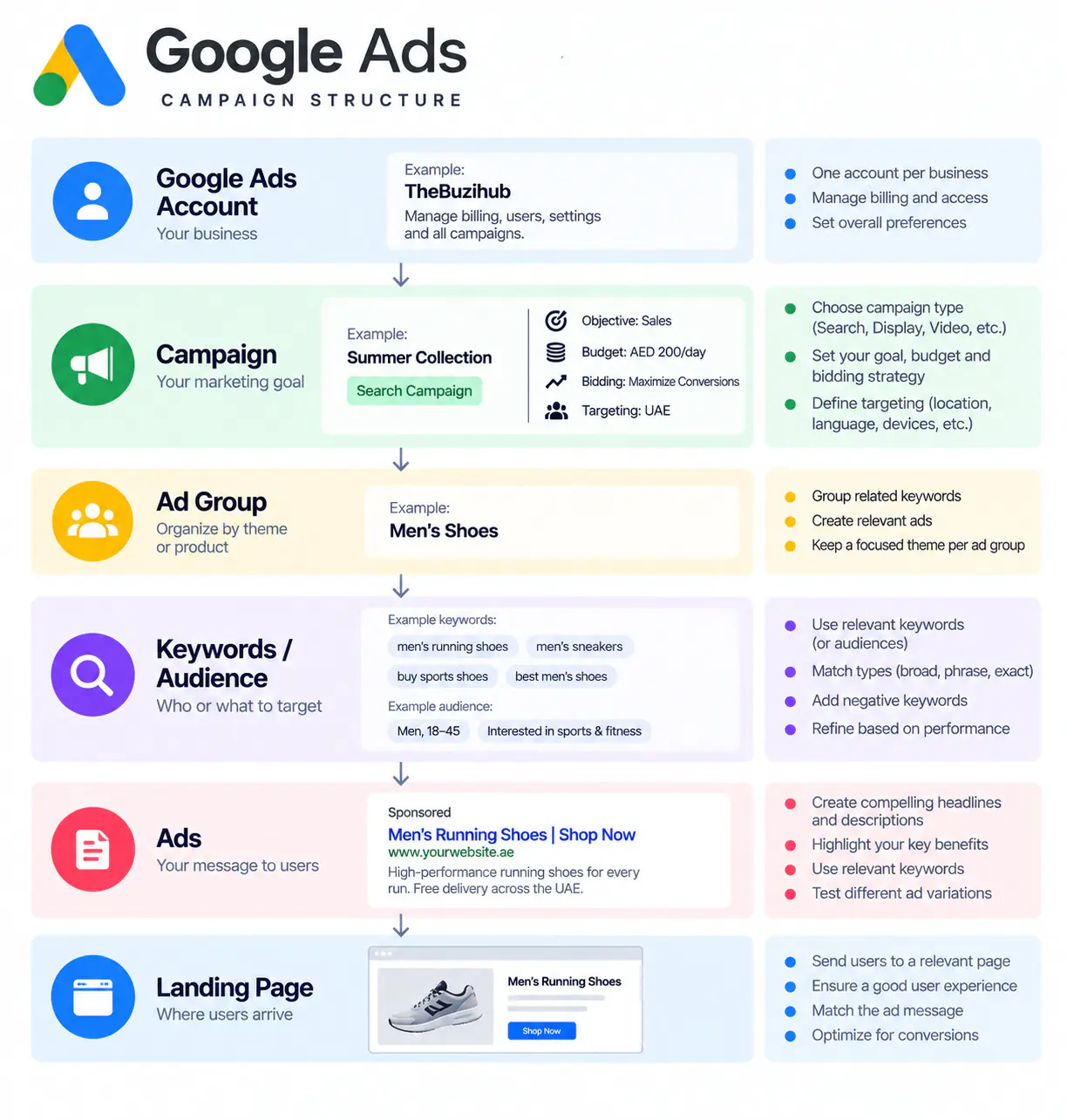
An account organised the way a website is organised averages good spend and bad spend together. A campaign returning acceptably overall is frequently one profitable segment subsidising three that are not, and no amount of optimisation at the campaign level will surface that.
Structure should follow how money behaves: brand terms separated from non-brand, high-margin separated from low, markets separated from each other. Separation costs a little efficiency in learning and buys the ability to see — and to switch things off.
The attribution starves what works
Last-click reporting credits the final touch, which in paid search is almost always a brand or high-intent term the customer would have found anyway. Run a programme on that view for a year and the budget migrates entirely to harvesting demand that already existed, while the activity that created it gets cut for underperforming.
The counter is not a better attribution model. It is measurement that can show causation — see the last section.
Account architecture
The structure is a management decision before it is a technical one, and these four splits do most of the work.
Brand and non-brand, always separate. Brand terms convert at rates non-brand cannot approach, and mixing them makes every efficiency number meaningless. Separating them also makes the brand-defence budget an explicit decision instead of an accident.
Markets separate, not "GCC". One regional campaign across six countries lets the cheapest market absorb the budget while a strategically important, more expensive one goes quiet. Different currencies, competitive densities and search volumes belong in different campaigns with their own budgets. The market-level differences that justify this are set out on what makes the Saudi market its own programme and how Qatar differs from its neighbours.
Language separate. Arabic and English campaigns have different costs, different competitive sets and different creative requirements, and combining them hides both.
Margin, not product taxonomy. Group by what a sale is worth, not by how the catalogue is arranged. A structure that mirrors the website is convenient for humans and useless for budget decisions.
Request your personalised marketing assessment — book a session and we will map your current account against these four.
Bidding, and what each strategy actually requires
Automated bidding works well when its preconditions are met and badly when they are not. The preconditions are the part that gets skipped.
| Strategy | What it needs to work | Where it fails |
|---|---|---|
| Manual CPC | someone paying attention weekly | scale — it stops being viable past a few dozen ad groups |
| Maximise clicks | a genuine need for volume over quality | almost everything else; it optimises for the cheapest click, not the useful one |
| Target CPA | steady conversion volume and one honest conversion action | thin volume, or several conversion types weighted equally |
| Target ROAS | accurate revenue values passed back per conversion | businesses where value is only known weeks later |
| Maximise conversions | a defined budget you intend to spend fully | uncapped bids in low-competition markets, where it overpays quietly |
| Portfolio strategies | enough combined volume to learn across campaigns | early accounts, where it obscures which campaign is responsible |
Two rules follow from the table. A new account usually starts manual or on maximised clicks with a tight budget, purely to generate the conversion data automated strategies need. And a strategy change resets learning, so changing three things at once produces a month of data that explains nothing.
Our performance-first approach
We do not begin by rewriting ads.
Fix measurement before spending. Conversion actions defined, values attached where value differs, tracking verified end to end by completing the actions ourselves. Nothing else is reliable until this is.
Establish the floor. What a customer is worth and what you can afford to pay for one. Without this figure, "good performance" is an opinion. With it, most optimisation decisions answer themselves.
Rebuild the structure around visibility. Separated as above, so an unprofitable segment can be identified rather than inferred.
Then improve the auction position. Creative, extensions, landing-page relevance, negative keywords. This is the work most agencies start with, and it is the fourth thing on the list because the first three change more.
Read the search terms weekly, by hand. Automation buys queries nobody predicted. Some are the best discovery you will get — a phrase customers use that nobody internally would have thought of. Others are wasted spend that no report will flag, because in aggregate they look ordinary and only reveal themselves when a person reads the actual words someone typed.
Test where the landing page is the constraint. Frequently the ad is fine and the destination is not — what to change when clicks arrive and nothing converts and campaign pages built for a single intent.
Creative, and why it is the last thing on this page
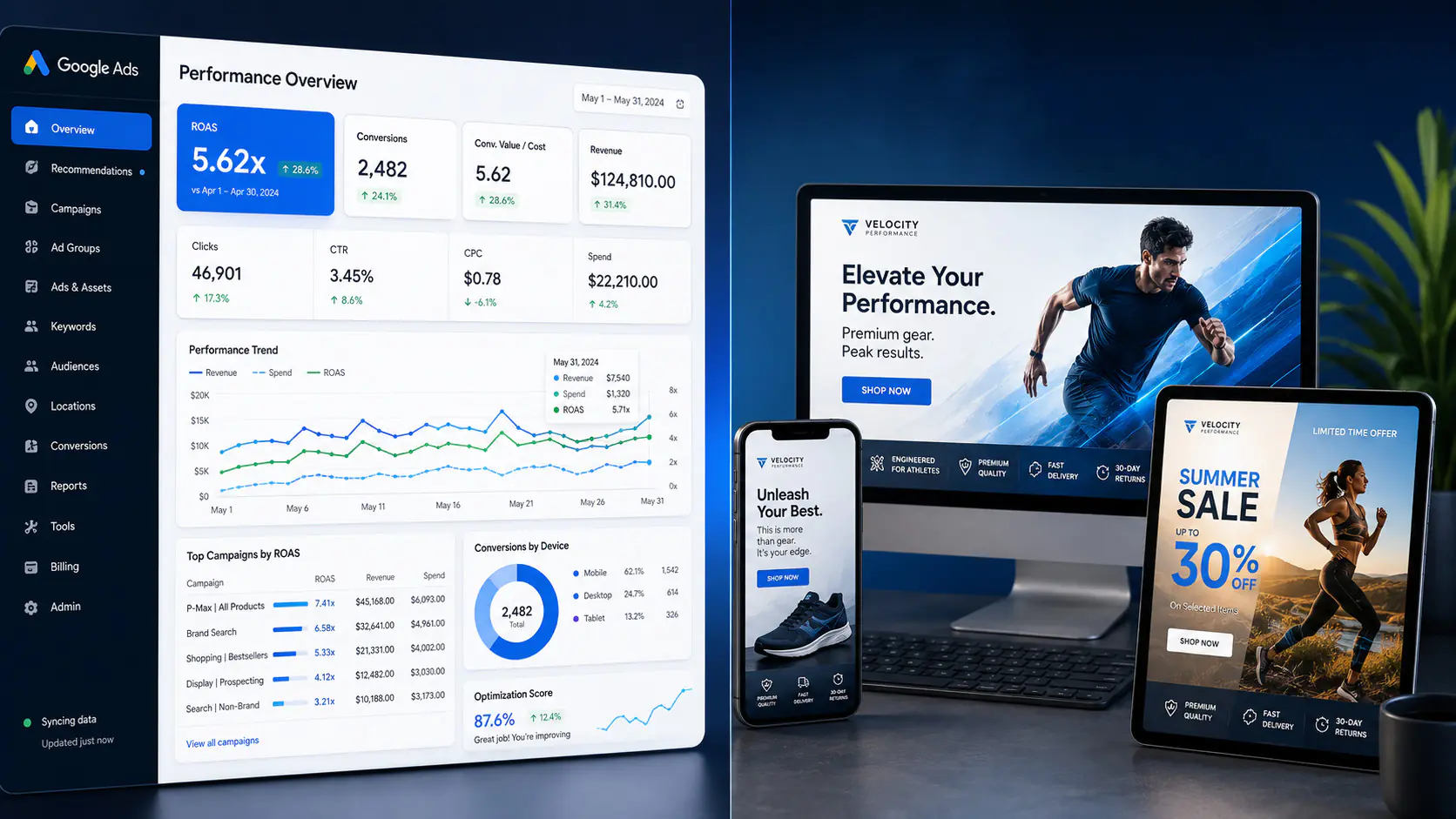
Ad copy and creative matter enormously — they are simply the part of the account that cannot compensate for the three leaks above, which is why they come after them.
Two things about creative are worth stating plainly for this region. Arabic ad copy has to be written, not translated: character limits behave differently, the sentence structures that fit a headline differ, and a translated call to action frequently lands as stilted in a way no English-speaking reviewer will catch. Budget for an Arabic copywriter rather than a translation pass.
And creative fatigue is real on paid social and largely absent on search. A search ad can run for a year against the same query without decay, because each impression reaches a new intent. A social creative shown repeatedly to the same audience declines predictably, which makes production capacity — not targeting — the usual constraint on scaling paid social.
Where a page has to carry the message the ad promised, that is a production question too — the assets and copy the campaigns consume.
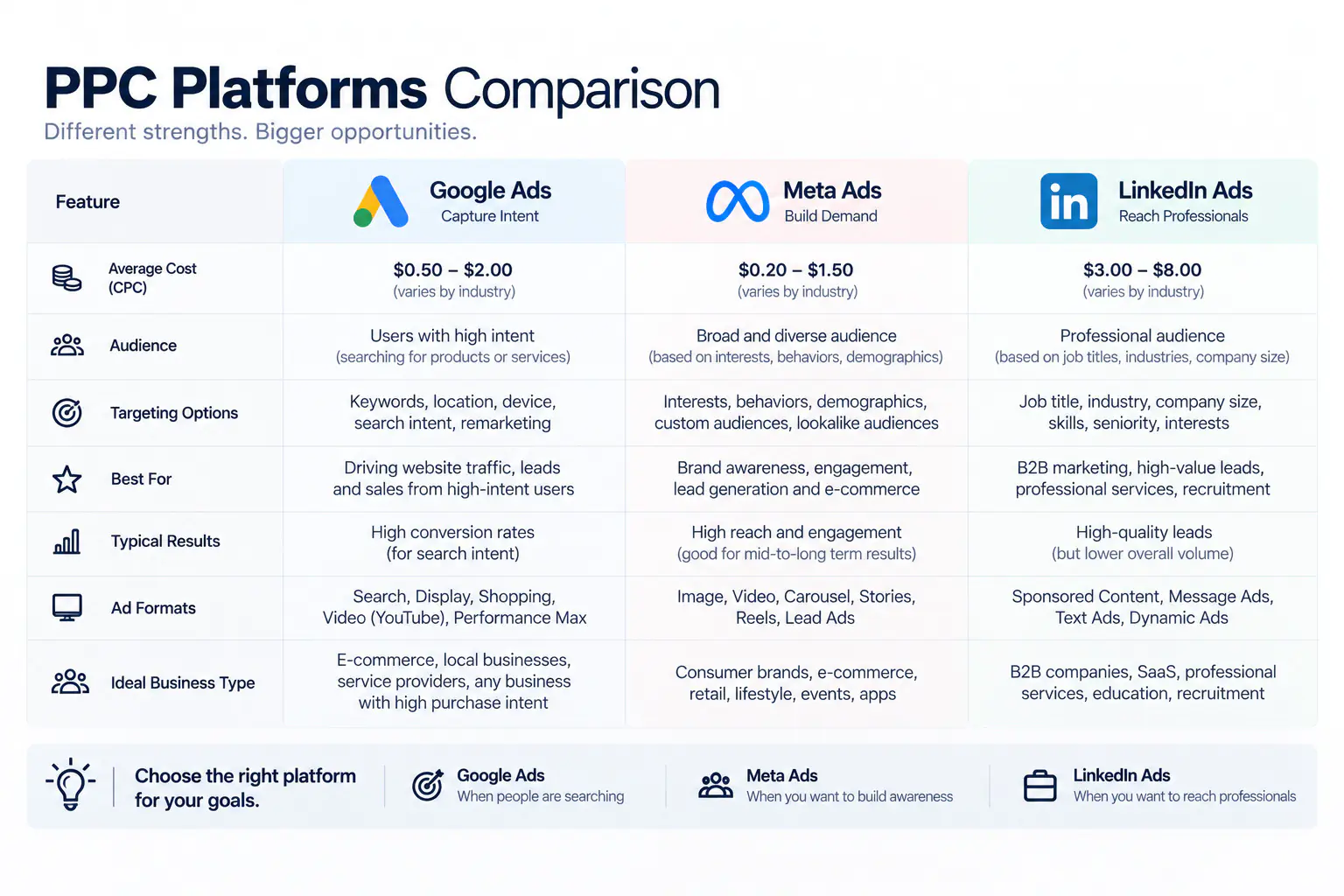
Which platform, and when
Channel choice should follow intent rather than familiarity.
Search captures demand that already exists. It is the first place to spend when people are actively looking for what you sell, and the last place to expect growth if they are not.
Shopping is search for products, driven by feed quality more than by bids — what a product feed has to get right.
Paid social creates demand rather than capturing it, which means it is judged on different numbers and over longer windows. The platform-level detail lives on Meta advertising and Snapchat, which behaves differently in this region than in most, with the strategic view on choosing a social channel mix.
Paid and organic together is a budget question rather than a philosophical one: paid buys coverage now, organic compounds slowly and cheaply, and the sensible ratio changes as organic coverage grows.
Where "performance marketing" is the framing rather than PPC specifically, the discipline defined and how it is run as a programme cover the wider scope.
Proving paid media caused something
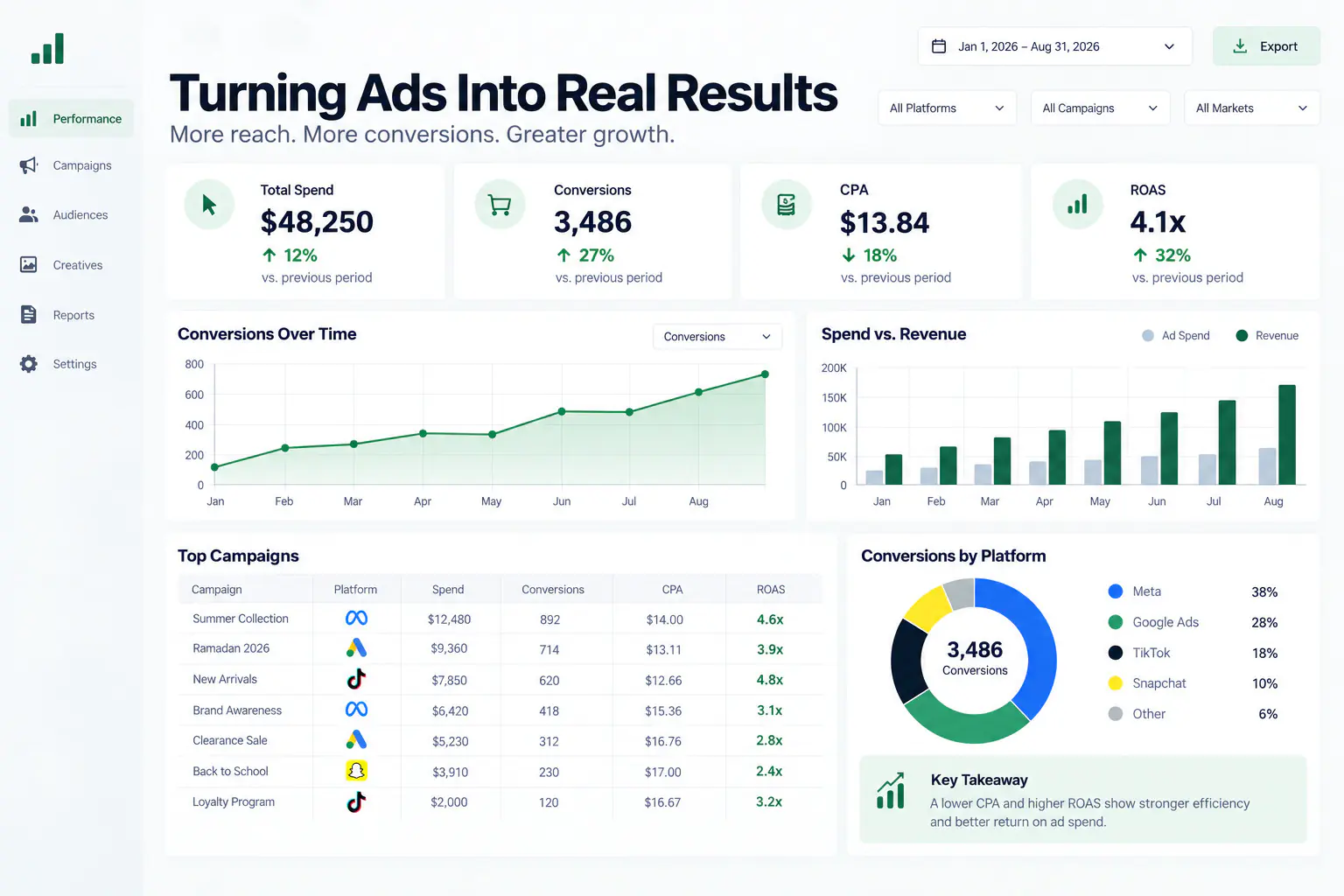
The hardest question in this discipline is not "what did we spend" but "what would have happened anyway".
Platform-reported conversions are not evidence of incrementality. Every platform is incentivised to claim credit, and two platforms will happily claim the same sale. Three methods produce answers you can defend:
Geo holdouts. Run in four markets, pause in one comparable market, compare. Blunt, and the most convincing evidence available for regional programmes.
Brand-term tests. Pause brand search bidding for a defined period and measure total brand traffic, not paid brand traffic. Sometimes the answer is that you were paying for clicks you already had; sometimes competitors were taking them. Both are worth knowing.
Budget step changes. Increase or decrease spend materially and observe total conversions rather than platform-reported ones. Diminishing returns become visible, and the point at which more budget stops buying more customers is the single most useful number a paid programme can produce.
All three cost something to run, which is why they are rarely done. The alternative is spending years unable to answer the only question the finance director is actually asking, so we build at least one of them into every programme and report it whether or not the answer flatters the work.
Definitions for the numbers this produces sit alongside every other channel's in which marketing numbers actually mean something, and budget context in what this work costs in the region.
Two paid programmes, published in full
TheBuzihub has run paid media in the Gulf since 2018 and publishes 24 client case studies on this site, 17 of them in marketing and advertising. Two are paid programmes: a B2B trading company's advertising and a retail programme run for the Saudi market, which is the multi-market structure question above in practice.
Paid Media FAQ
How much should we budget to start?
Enough that the account can gather conversion data within a reasonable period, which depends far more on your cost per click and conversion rate than on a headline figure. A useful test: if the projected budget produces fewer than roughly thirty conversions a month, automated bidding will not have enough signal, and you should plan for manual management or a narrower scope.
How quickly does PPC produce results?
Traffic arrives the day campaigns go live. Reliable performance data takes longer — typically four to six weeks before bidding strategies have learned, and a full sales cycle before return can be judged honestly. Businesses with long consideration periods should expect the first month to be data collection rather than performance.
Should we advertise on our own brand name?
Test it rather than assuming. Pause brand bidding for a defined period and measure total brand traffic: if organic absorbs nearly all of it and no competitor is bidding against you, the spend was buying clicks you already had. If competitors are present, brand defence is usually worth its cost.
Do we need separate campaigns for Arabic and English?
Yes. They have different costs, different competitors and different creative requirements, and combining them means one language's performance is permanently disguised by the other's. Separation also lets you fund the language that is actually working rather than an average of the two.
Why did performance drop when nothing changed?
Something changed — usually a competitor's budget, a seasonal shift, or a tracking break. Check conversion tracking first, because a silent measurement failure looks exactly like a performance collapse and is far more common. After that, look at auction insights and impression share before touching bids.
Can we run PPC ourselves and use you for strategy?
Yes, and for some businesses that is the right arrangement. We do the measurement setup, structure and the incrementality testing, and your team runs day-to-day management. What does not work is splitting the same campaign between two owners, because bid and budget decisions need one person accountable.
Who owns the ad account?
You should. Accounts should be created under your own billing and administration, with agency access granted rather than the reverse. An account owned by an agency takes its historical performance data with it when the relationship ends, and that history is worth real money to whoever manages the account next.
Is a high click-through rate a good sign?
Not on its own. A high rate with a low conversion rate usually means the ad is promising something the page does not deliver, which costs more than a lower rate would have. The pairing worth watching is click-through rate against cost per acquisition; either number alone can improve while the account gets worse.
Related Reading at TheBuzihub
- The Dubai-level view of a whole programme — where paid sits alongside every other channel.
- Feed quality for product advertising — where Shopping performance is actually decided.
- Meta campaign management — demand creation rather than capture.
- What performance marketing means — the definitional piece behind the discipline.
- Running it as an ongoing programme — team, cadence and reporting.
- Destination pages built for one intent — the other half of every paid click.
- Budget context for the region — what this work costs before anyone quotes.
- A Saudi retail advertising programme — published in full.
Before rebuilding, read the account
Most paid accounts do not need rebuilding. They need their conversion tracking verified, their structure separated so waste becomes visible, and one honest incrementality test.
Begin your growth journey with a review: read access to the account, a look at how conversions are defined and fired, and a structural assessment. What comes back is where the money is going, what it is producing, and which of the three leaks above you are paying for.
Talk to us · How we work · The full service range
Phone: +971 54 545 3510 Email:info@thebuzihub.comOffice hours: Monday to Friday 09:00–18:00, Saturday 09:00–13:00 (UAE time). Current hours are always on the contact page.